
 Golf in the Year 2000, or, What We Are Coming To is an 1892 novel by J. McCullough. It is a specimen of science fiction of the Victorian era, and an example of time travel in fiction. It tells the story of Alexander J. Gibson, who falls into a deep sleep in 1892 and awakens in 2000.
Plot
The plot follows Gibson as he is introduced to the wonders of the dawning 21st century by his host, the current owner of the house where Gibson lay sleeping for 108 years. Like Gibson, the host is a passionate golf player. Much of the story revolves around the two men’s visits to the golf course, where Gibson learns first-hand the radical changes that technology has made to the game. There are golf clubs that automatically keep their user’s score, driverless golf caddies or carts, and special jackets, which everyone must wear, that yell “Fore!” whenever the player begins his swing.
 Modern readers are fascinated by the many startlingly accurate “predictions” contained in Golf in the Year 2000. These include bullet trains, digital watches, and television (although those specific terms are not used). It correctly predicts the conversion of the British pound to decimal coins. It notably fails to anticipate modern air travel, instead postulating that undersea trains will cut trans-Atlantic travel time to a few hours. Similarly, Gibson’s jest about travel to the moon is answered with an explanation that this is still a few generations off. It anticipates a form of chemical warfare, but suggests a very different impact.
One of the novel’s “predictions” is the liberation of women. In the book, women have achieved substantial equality with men, but with some remaining and new differences. Gibson learns that the women of 2000 dress like men, hold key positions in business (bank clerks are exclusively female) and government (but not yet prime minister, due to petty rivalries), and in fact do almost all of the work… while the men play golf full-time. In the view of the fictional narrator, this is a true utopia, though he does not find 21st century females to his liking.
Source: Wikipedia
 The Lord Commissioner travels to Earth by spaceship; he endures hallucinations due to the interplanetary “atmosphere.” He lands at “Midland,” the capital of the United States, and meets the president, who happens to be a woman. American society has been reformulated after a revolution around the turn of the twentieth century, when irate citizens blew up the Capitol and its congressmen. Laws must be approved by popular referenda before they take effect. The United States has expanded to include Canada and Central America. The salaries of business executives are limited. Gender equality has been achieved.
 From the
 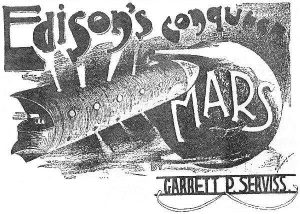 The book features Thomas Edison as the primary character, though neither Edison nor H. G. Wells were involved in its creation. Set after the devastating Martian attack in the previous story, the novel depicts Edison leading a group of scientists to develop ships and weapons, including a disintegration ray, for the defence of Earth. Edison and company fight the aliens in space and on Mars, eventually causing a flood that defeats the enemy and forces an end to hostilities. Serviss wrote himself into the story as a professor whom Edison consults; also appearing are scientists such as Edward Emerson Barnard, Lord Kelvin, Wilhelm Röntgen, and Silvanus P. Thompson, and heads of state such as Queen Victoria, U.S. President William McKinley, Kaiser Wilhelm II, and Emperor Mutsuhito.
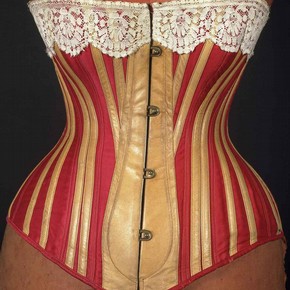 By the 1880s the corset had become a very elegant and desirable object in a woman’s wardrobe and much attention paid to its design and execution. The rapid growth of the corset manufacturing industries meant that there was greater variety in materials, colour, size and fit. The most expensive might be made of satin, brightly coloured corsets also became more acceptable.
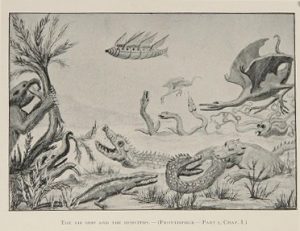 Modern critics have noted the book largely for its depiction of giant dinosaur-like Venusian beasts. Pope’s pair of novels on Mars and Venus (volumes in a projected Romances of the Planets series that the author never continued) were precursors of popular planetary adventure novels of the twentieth century by Edgar Rice Burroughs, Otis Adelbert Kline, and other writers.
 Women
Women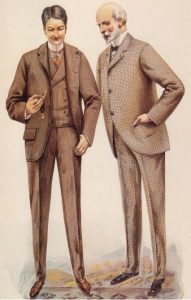 Men
Men It’s a common myth that your hair and nails continue to grow after death. While this is not true, it certainly looks that way and that’s part of what frightens people. In fact, what happens is that, with no blood flow, your skin begins losing moisture after death. This lack of moisture causes your skin to shrink and pull back, which in turn reveals more of your hair (straight down to the follicle), while also exposing more of your nails. In other words, your hair and nails aren’t growing, they are simply exposed.
 Why did people immigrate to the US?